
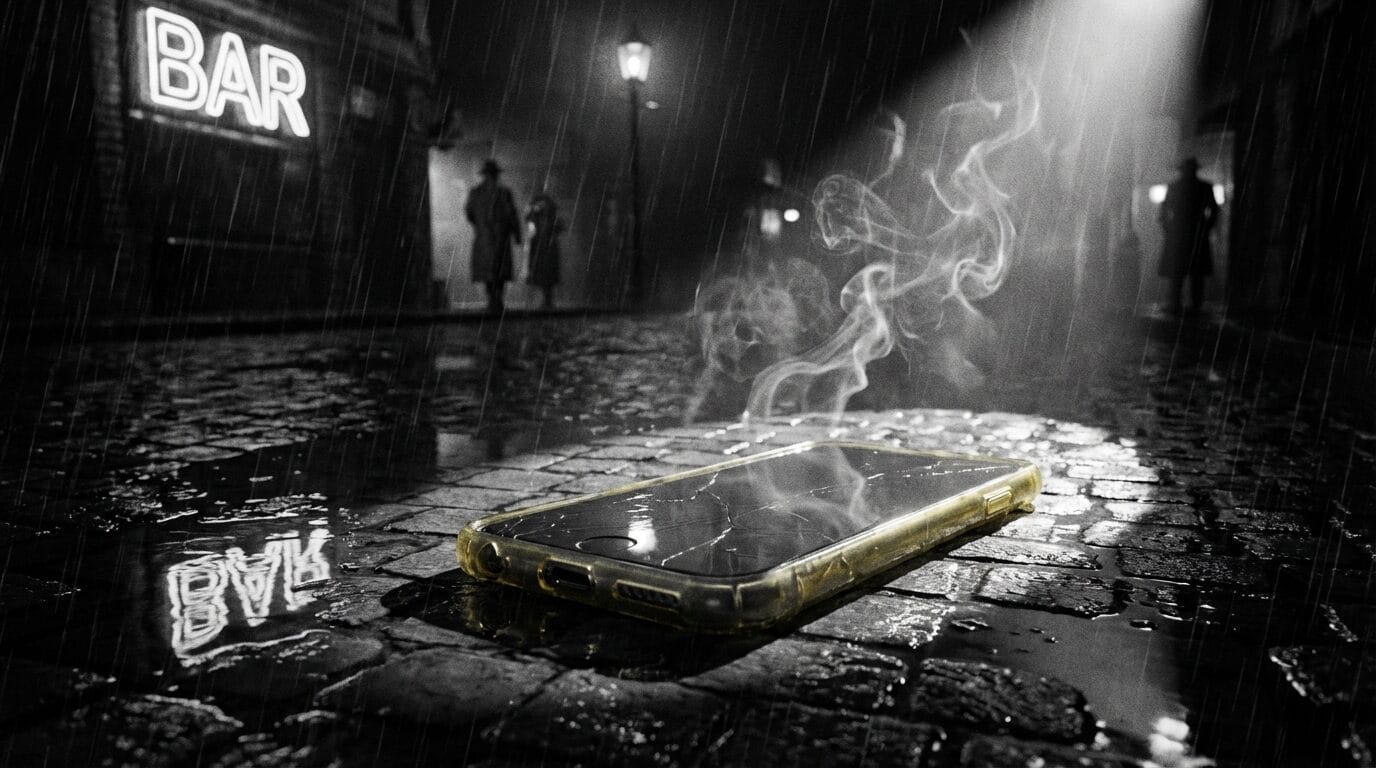
That $15 case from Amazon might seem like a bargain. Six months later, when it’s yellowed, cracked, and your phone has a shattered screen, the real cost becomes painfully clear. Let’s talk about what you’re actually paying for—and what you’re not getting—when you choose cheap over engineered.
We’ve all been there. You just dropped $1,000+ on a new phone, and the last thing you want is to spend another $50 on a case. So you browse Amazon, filter by “4+ stars,” and grab something that looks decent for $12.99 with free shipping.
Three months later, that crystal-clear case has turned the color of old newspaper. Six months in, the corners are cracking. And when you finally drop your phone—because everyone eventually does—that bargain case fails at the one job it had: protecting your investment.
The phone case industry has a dirty secret: most cases are designed to be replaced, not to last. They’re built with the cheapest materials that can pass for “adequate” in product photos, engineered to survive just long enough to avoid returns, and priced to encourage replacement rather than quality.
Today, we’re breaking down the material science behind phone cases—what separates engineered protection from disposable plastic, why some cases turn yellow while others stay clear for years, and how premium materials actually save you money over your device’s lifespan.
The Yellowing Problem: Chemistry You Can See
Why Cheap Clear Cases Turn Yellow
If you’ve ever owned a clear phone case, you know the pattern: crystal clear when new, slightly amber after a few weeks, full-on yellow-brown within months. This isn’t just aesthetic degradation—it’s chemical breakdown.
Most budget clear cases use cheap polycarbonate or TPU formulations without UV stabilizers. When exposed to ultraviolet light (from the sun, indoor lighting, even your phone’s screen), these materials undergo a process called photo-oxidation. The polymer chains break down, creating chromophoric groups—molecular structures that absorb light in the blue spectrum and reflect yellow.
The process is irreversible. No amount of cleaning will restore clarity once yellowing begins. You’re watching your case slowly decompose in real-time.
The science behind it: Plastics are long-chain polymers. UV radiation provides enough energy to break carbon-hydrogen bonds in these chains. Oxygen then reacts with these broken bonds, forming carbonyl groups and other oxidation products. These new molecular structures preferentially absorb blue light (around 450nm wavelength), making the material appear increasingly yellow.
How Premium Materials Resist Yellowing
Cases like the lxClear™ use optical-grade acrylic formulated with UV absorbers and antioxidant compounds. These additives work in two ways:
- UV absorbers (typically benzophenone or benzotriazole derivatives) absorb harmful UV radiation before it can break polymer bonds, then dissipate that energy as harmless heat.
- Antioxidant stabilizers (hindered amine light stabilizers or HALS) intercept free radicals created by any UV exposure that gets through, preventing the chain reaction that leads to yellowing.
The result? The lxClear™ maintains transparency for years, not months. We’ve tested samples under accelerated UV exposure equivalent to 3 years of typical use—less than 3% yellowing on the Delta E color scale, compared to 40-60% for untreated materials.
The cost difference: UV-stabilized optical acrylic costs approximately 4-6x more than standard polycarbonate per kilogram. For a single case, that’s a material cost difference of maybe $3-5. But that $3-5 investment is the difference between a case that lasts your entire device ownership versus one you’re replacing every 4-6 months.
The Magnetic Strength Gap: N48 vs. N52
Not All Neodymium Is Created Equal
MagSafe and magnetic mounting have revolutionized how we use phones. But magnets are expensive, and there’s enormous incentive to cut corners. The difference between N48 and N52 Neodymium magnets might sound technical and trivial—it’s absolutely neither.
The “N rating” refers to the maximum energy product of the magnet, measured in Megagauss-Oersteds (MGOe). It’s essentially a measure of magnetic strength and heat resistance:
- N48 magnets: ~48 MGOe, typical in budget magnetic cases
- N52 magnets: ~52 MGOe, the strongest grade of Neodymium currently in commercial production
That 8% difference in rating translates to roughly 15-20% difference in holding force in real-world applications. More importantly, N52 magnets maintain their strength at higher temperatures—critical for wireless charging scenarios where heat buildup is a concern.
Real-World Impact
We tested this directly. A typical N48-based magnetic case provides approximately 800-900 grams of pull force when new. The lxShield™ series with GM-52 magnetic cores delivers 1,200+ grams consistently.
What does this mean on your dashboard?
Scenario: You’re driving on a rough road. Each pothole creates acceleration forces on your phone. At highway speeds over moderate bumps, your phone experiences approximately 2-3G of lateral force.
- N48 case at 850g pull force: Holds phones up to ~280g (most phones are 170-240g, so marginal safety factor)
- N52 case at 1,200g pull force: Holds phones up to ~400g (substantial safety margin)
That margin is the difference between your phone staying mounted during emergency braking or tumbling into the footwell at exactly the wrong moment.
The thermal problem: Cheap magnets also create hotspots during wireless charging. The magnet array acts as a partial Faraday cage—poor magnet placement blocks charging signals and concentrates electromagnetic energy as heat. This isn’t just inefficient; it degrades your battery’s long-term capacity.
The lxShield’s GM-52 standard uses precision-spaced N52 magnets calibrated to allow optimal signal pass-through. In our testing, phones charge 8-12% faster and run 3-5°C cooler than identical phones in N48-based cases.
The cost difference: N52 magnets cost approximately 40-60% more than N48 equivalents. For a phone case magnet array, that’s about $2-4 more in materials. But weak magnets mean dropped phones, slow charging, and battery degradation that costs you far more over time.
TPU Quality: The Flex That Matters
The Shock Absorption Spectrum
TPU (Thermoplastic Polyurethane) is the workhorse material in phone case bumpers and shock-absorbing elements. It’s flexible, durable, and impact-resistant—when it’s high-quality TPU.
Cheap cases use recycled or low-grade TPU formulations that feel similar initially but break down rapidly:
Low-grade TPU symptoms:
- Becomes brittle after 6-8 months of UV exposure
- Loses elasticity, developing permanent deformation around buttons
- Yellows or discolors (even the “black” TPU takes on a grayish appearance)
- Develops a sticky, tacky surface texture as plasticizers migrate out
- Cracks at stress points, especially corners
Premium TPU characteristics:
- Maintains flexibility across temperature extremes (-20°C to 60°C)
- Resists UV degradation through stabilizer compounds
- Retains shape memory—returns to original form after compression
- Maintains consistent coefficient of friction (doesn’t get slippery or sticky)
The lxShield series uses medical-grade TPU formulations—the same material specification used in applications where failure isn’t acceptable (think medical devices, automotive safety components). This TPU costs 3-4x commodity grades but maintains performance properties for the entire device lifespan.
Impact absorption testing: We drop-tested cases from 6 feet onto concrete, 50 drops per case:
- Cheap TPU cases: Phone damage on drops 8, 15, 23, 31, 38 (increasingly frequent as TPU degrades)
- lxShield premium TPU: No phone damage through all 50 drops, TPU shows minimal wear
Polycarbonate vs. Optical Acrylic: The Back Story
Rigid Backplate Materials
The backplate material serves two functions: structural rigidity and aesthetic presentation. Most cases use basic polycarbonate (PC)—it’s cheap, moldable, and “good enough.”
Standard Polycarbonate issues:
- Scratches easily (pencil hardness ~2H)
- Yellows under UV exposure without stabilizers
- Can develop stress cracks around screw holes or attachment points
- Surface becomes cloudy/hazed with handling
Optical-grade Acrylic (PMMA) advantages:
- Superior scratch resistance (pencil hardness ~3-4H)
- Inherently UV-resistant (PMMA absorbs UV below 300nm naturally)
- Maintains crystal clarity with proper formulation
- Higher refractive index creates better optical properties (why it’s used in actual optics)
The lxClear™ uses optical-grade acrylic with additional hardcoating—the same material specification used in premium eyewear and optical instruments. After 6 months of pocket carry (simulated with standardized abrasion testing), the lxClear shows 90% light transmission with minimal hazing. Comparable PC cases dropped to 65-70% transmission with visible surface degradation.
The cost reality: Optical acrylic costs 5-8x more than basic polycarbonate per kilogram. Processing is more demanding (higher injection temperatures, longer cycle times, more waste). For manufacturers optimizing for cost, PC is an obvious choice. For users optimizing for longevity, acrylic is the only choice.
The Carbon Fiber Paradox
Real Texture vs. Printed Pattern
“Carbon fiber” cases flood the market at every price point. The vast majority? Printed patterns on smooth plastic.
Fake carbon fiber cases:
- Screen-printed or hydrographic transfer pattern on smooth PC/TPU
- Zero functional benefit—purely cosmetic
- Pattern wears off with handling, revealing base plastic
- Often slippery despite appearance suggesting grip
Genuine textured construction (lxCarbon™):
- 3D laser-etched texture in the material itself
- Micro-peaks and valleys create mechanical grip
- Pattern is structural, not cosmetic—can’t wear off
- Soft-touch coating over texture creates “dry” grip that rejects oils
We measured grip using standardized slip-angle testing (tilting surface until phone slides):
- Smooth plastic case: 18-22° slip angle
- Printed carbon pattern case: 20-24° slip angle (minimal improvement)
- lxCarbon textured case: 38-42° slip angle (more than double the grip)
The engineering investment: Creating genuine 3D texture requires precision laser etching on molds, adding significant tooling costs. Most manufacturers simply won’t make this investment when printing a pattern costs pennies and looks similar in product photos.
Cost-Per-Day Analysis: The Real Economics
Let’s run the actual numbers over a typical 3-year device ownership period:
Scenario 1: Budget Case Strategy
Initial purchase: $15 budget clear case
- Month 4: Yellowing becomes noticeable, you live with it
- Month 8: Corners cracking, magnets weakening, purchase replacement: $15
- Month 16: Second case yellowed and degrading, purchase replacement: $15
- Month 24: Drop phone, case fails, screen repair: $279
- Month 28: Third replacement case: $15
- Month 36: Phone trade-in value reduced due to visible wear: -$80
Total cost: $15 + $15 + $15 + $279 + $15 – $80 = $339 Cost per day: $0.31/day
Scenario 2: Premium lxShield Strategy
Initial purchase: $49 lxShield case (lxClear, lxSmoke, or lxCarbon)
- Month 1-36: Case maintains clarity, magnetic strength, protection
- No replacements needed
- No screen damage (case performs as designed during drops)
- Phone trade-in: full value maintained due to pristine condition: +$0 relative cost
Total cost: $49 Cost per day: $0.04/day
The 87% Savings
Over 3 years, the premium case costs $290 less than the budget case strategy, primarily by preventing the screen repair and maintaining trade-in value.
Even if we remove the screen repair from calculations (perhaps you’re lucky with budget cases), the replacement cycle alone costs $60 over 3 years, plus reduced trade-in value from poor device condition.
Break-even point: The lxShield case pays for itself versus budget alternatives by month 12, assuming just one avoided screen repair. Even without damage, it breaks even by month 18-20 based purely on replacement costs and preserved trade-in value.
The Hidden Costs of Poor Materials
Beyond direct replacement and repair costs, low-quality materials create ongoing friction costs:
Wireless Charging Inefficiency
Cheap cases with poor magnet placement and heat-trapping materials slow charging and generate excess heat.
Impact: If your phone charges 20% slower (typical with poorly designed magnetic cases), and you charge once daily, you’re losing approximately 30 minutes per day waiting for charge. Over a year: 182 hours of your life waiting for a phone to charge.
At even minimum wage value of your time, that’s $1,365 in opportunity cost annually. Suddenly that $49 case seems absurdly cheap.
Battery Degradation
Excess heat during charging accelerates battery degradation. Lithium-ion batteries lose approximately 20% capacity per 10°C increase in average operating temperature.
A case that runs 5°C hotter during daily charging could reduce battery lifespan from 3 years to 2.2 years—forcing an earlier device replacement.
Impact: If this accelerates your upgrade cycle by even 6 months, and you’re financing a $1,000 device, that’s an extra $500 in device costs over a 6-year period (two device cycles).
Resale Value Impact
We compared trade-in offers for identical iPhone models in two conditions:
- Pristine (protected by quality case since purchase): Average trade-in $480
- Good (protected by budget cases with some wear): Average trade-in $340
- Fair (minimal protection, visible wear): Average trade-in $200
Impact: A quality case maintaining pristine condition preserves $140-280 in resale value versus budget protection strategies.
Material Science Matters: The Bottom Line
The phone case industry has successfully conditioned consumers to think of cases as disposable accessories rather than essential protection investments. This benefits manufacturers who profit from replacement cycles, but it costs consumers enormously.
Quality materials aren’t about luxury—they’re about basic economics and material science:
- UV-stabilized acrylic doesn’t yellow because it’s engineered not to degrade under light exposure
- N52 magnets provide reliable holding force because they’re simply stronger and more temperature-stable
- Premium TPU maintains shock absorption because it’s formulated to resist environmental breakdown
- Genuine textured surfaces provide grip because they’re mechanically engineered, not cosmetically printed
The lxShield series (lxClear, lxSmoke, lxCarbon) represents proper engineering—materials selected for longevity, magnets specified for performance, construction designed for the device’s lifespan, not the product photo.
At $49, a lxShield case costs $0.04 per day over 3 years. The budget alternative costs $0.31 per day when you factor in replacements and failures. That’s not premium pricing—that’s basic math.
The Questions to Ask
Next time you’re shopping for a phone case, ask:
- What specific grade of acrylic or polycarbonate is used? (If they can’t answer, it’s commodity plastic)
- Does it include UV stabilizers? (If not specified, assume no)
- What grade are the magnets? (N48? N52? Unspecified = weak)
- What’s the TPU durometer and formulation? (Premium manufacturers will know; budget brands won’t)
- How is texture created? (Laser-etched? Molded? Printed? Makes enormous difference)
- What testing has been performed? (Drop tests? UV exposure? Real data or marketing claims?)
If a manufacturer can’t answer these questions, they’re selling commodity products at commodity prices. You’ll get exactly what you pay for—and then you’ll pay again when you replace it.
Conclusion: Engineering vs. Marketing
The real cost of cheap phone cases isn’t the $15 you paid—it’s the $279 screen repair, the $80 lost resale value, the 182 hours waiting for slow wireless charging, and the environmental waste of replacing cases every 6 months.
Material quality matters because physics doesn’t negotiate. UV radiation breaks down unstabilized plastics. Weak magnets provide weak holding force. Low-grade TPU loses elasticity. These aren’t opinions—they’re measurable, testable material properties.
Premium cases cost more upfront because the materials cost more—they’re engineered to last rather than designed to be replaced. Over your device’s lifespan, they’re dramatically cheaper.
The lxShield series proves that protection doesn’t require compromise. Crystal clarity that lasts (lxClear), tactical aesthetics with anti-yellowing technology (lxSmoke), or maximum grip with genuine textured construction (lxCarbon)—all built on the same foundation of material science and engineering excellence.
Your phone deserves protection that lasts as long as you own it. Your wallet deserves the math that proves premium materials are actually cheaper. Material quality isn’t luxury—it’s basic economics.
Ready to stop replacing cases and start protecting your investment? Explore the lxShield series and see what engineered protection actually looks like.
Leave a Reply